What ChatGPT Wallet actually does
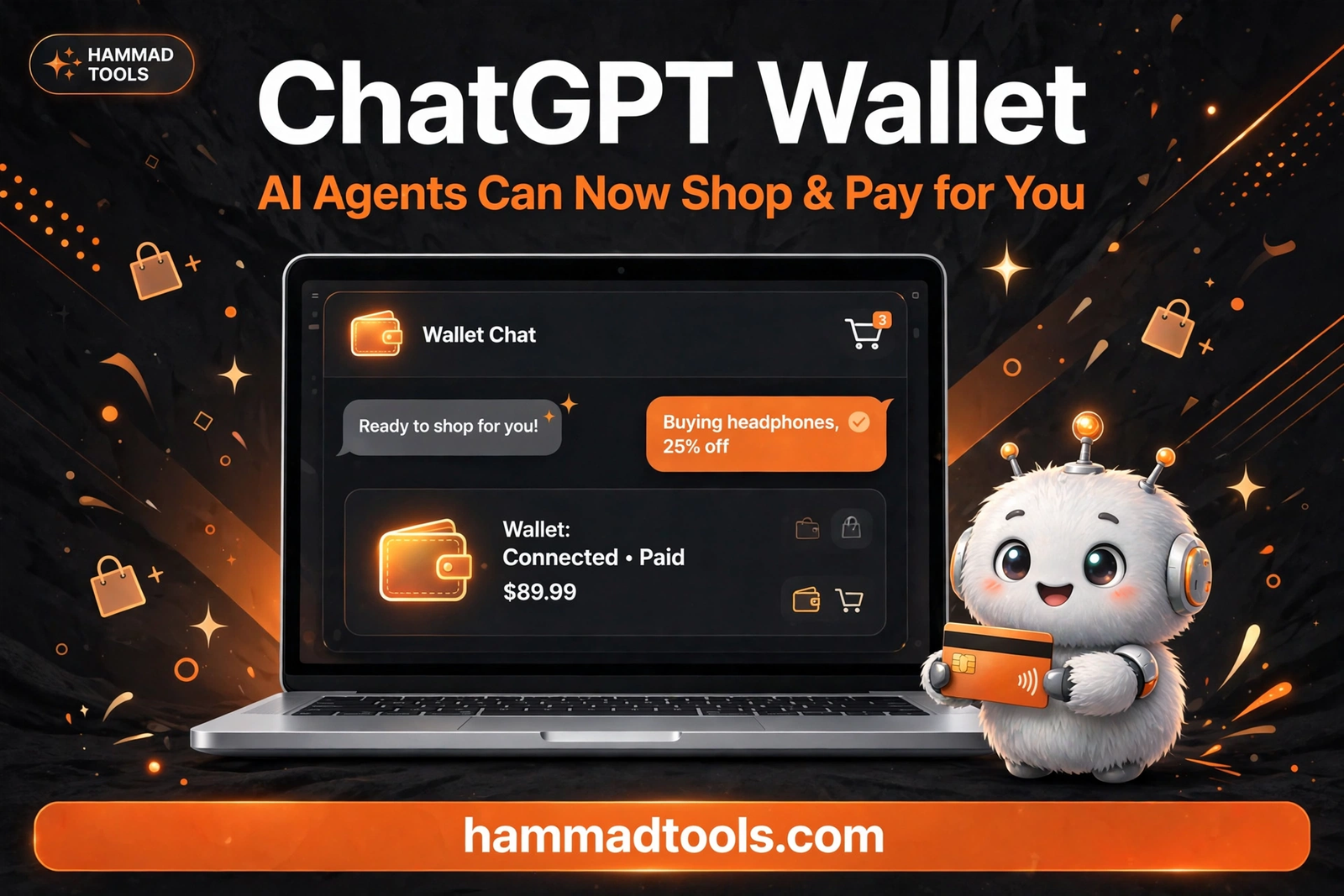
ChatGPT Wallet is not a stored balance, and it is not a new bank account. It is a card wallet. You add an eligible payment card once, and when your dot buys something for you, the wallet charges that card using a payment token — a stand-in for your real card number. Your actual card details are never shared with the dot, and never shared with the merchant.
The feature lives inside dots, the always-on agents OpenAI introduced on 29 September 2026. A dot has its own cloud computer and browser and can connect to more than 4,000 apps, so it can search for products, compare options, fill a cart and complete checkout in one continuous task. Wallet is the missing piece: until now, the agent could do everything except pay.
OpenAI built the wallet with American Express, Mastercard and Visa, using the payment rails that already exist rather than inventing new ones. The usual card rules still apply: shoppers keep earning their credit card rewards, and they keep the protections that come with cards, including the ability to dispute a transaction.
How a purchase works
The flow is deliberately ordinary. You add your eligible card to ChatGPT Wallet once, then ask your dot to help with a purchase — the kind of request OpenAI itself gives as an example is "help me find a new sweater" or "book me a hotel for my trip to Chicago next weekend."
From there, the dot does the searching and the deciding, and you do the approving. Before any money moves, you review the items, the total and the payment card that will be used. Then you approve the purchase directly with a security check such as Face ID or a fingerprint, which creates a record of the transaction. Every purchase needs that approval — there is no silent spending at launch.
Behind the scenes, the merchant automatically receives what it needs to fulfil the order, including the shipping address and contact information. You do not re-enter your card details for every purchase, and the store never sees your real number.
Who can use it — and who cannot
The launch is narrow on purpose. ChatGPT Wallet is rolling out first to a limited number of ChatGPT Pro subscribers in the United States who are 18 or older and hold an eligible US-issued card. OpenAI says it started small so it can learn from real-world use before opening it up further.
That leaves most people waiting. OpenAI has given no date for Wallet reaching ChatGPT Plus, Business or free users, and no timetable for any country outside the United States. And because Wallet only works inside a conversation with a dot, it is not available in ordinary ChatGPT chats or in standalone Codex threads. If your plan does not include dots, Wallet is not on your account yet.
The safety net: tokens, biometrics and your card protections
The design answers the obvious worry first. The tokenised payment means the agent handling your purchase never sees your card number, and neither does the shop. The biometric approval means no purchase completes without you actively saying yes — a fingerprint or a face scan, every single time.
OpenAI is also planning more control for the future. The company says it wants to let users set spending limits and configure parameters around purchase categories or time periods, so they can pre-approve certain purchases for the agent to handle more autonomously. For now, though, the rule is simple: you check, you approve, it pays.
Why retailers are split — and why Amazon said no
Not every shop will let an AI agent through the door. Some retailers are already blocking AI agents from using their sites, and the largest of them is Amazon, which aims to steer shoppers to its own AI agent, Alexa, instead. Wallet will not work on sites that block agents, and OpenAI has named no specific merchant partners at launch.
To win retailers over, OpenAI has published a Commerce Partner Playbook — tools and guidance for sites that want to support customers using agents. The pitch to shops is clear: agent-driven customers are coming either way, and a store that works with them gets the sale while a store that blocks them does not.
The early evidence is mixed. DoorDash and Uber have reported low numbers of orders placed by AI agents so far, which suggests shoppers are still cautious. But Meta's Muse, which now has over 10 million users, has seen AI-assisted shopping become a top activity in its app. OpenAI is betting that the habit forms once the checkout friction disappears.
What this means for everyday shopping
ChatGPT Wallet is best understood as the moment AI assistants stop being advisers and start being actors. Finding a product was the easy part. Paying for it — with real money, real addresses and real consequences if it goes wrong — is where trust gets tested.
For now, the test is small: a limited group of US Pro subscribers, one approval at a time, with the card networks' protections still standing behind every order. If it works, the next step is obvious — spending limits, pre-approved categories, more retailers, more countries.
Either way, the checkout button has moved. It used to sit on the store's website. Now it sits inside the conversation.