
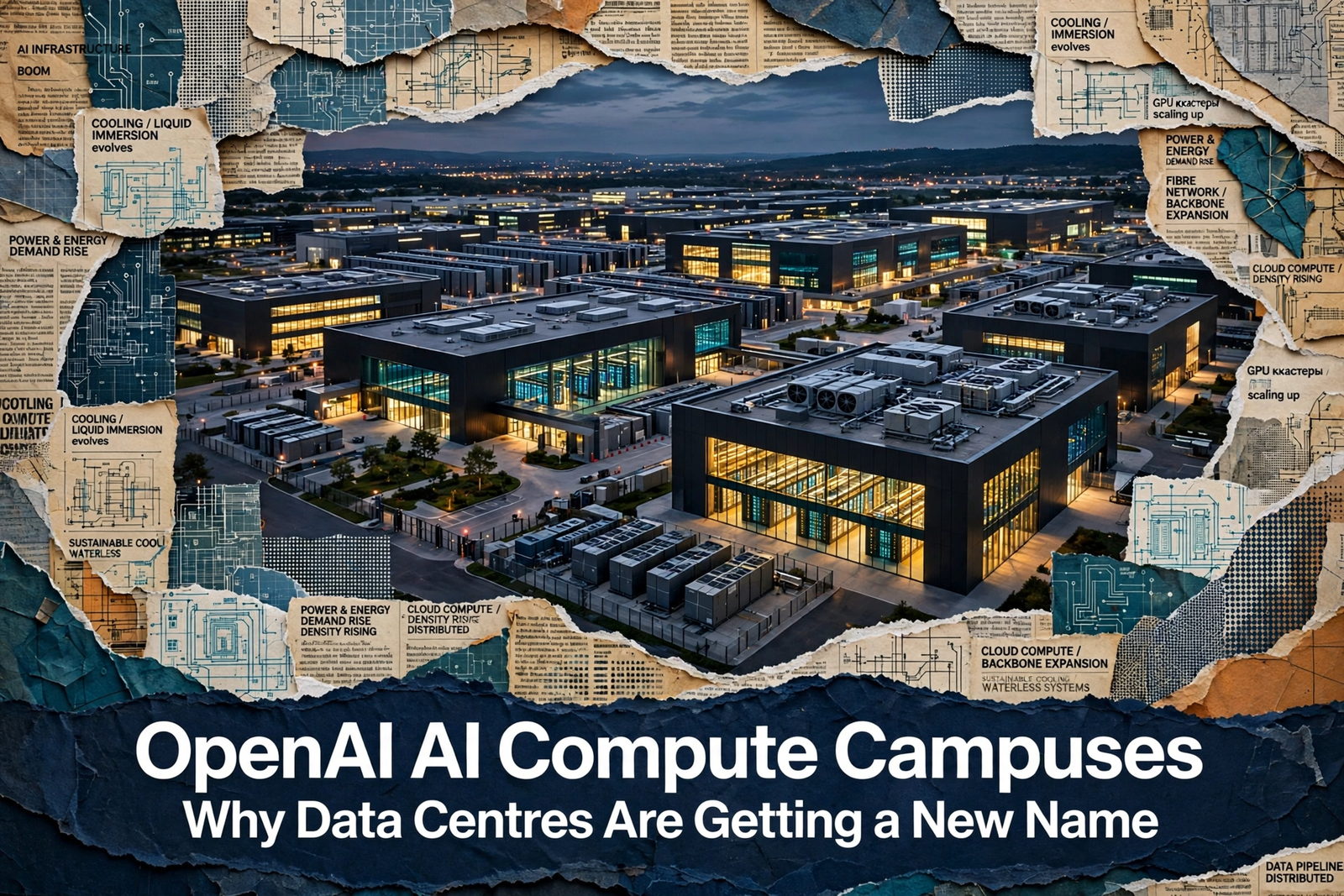
A new name for a very unpopular building
Data centres are deeply unpopular. That blunt opening is where TechCrunch begins its report, and it is also the best place to start understanding OpenAI's next move. According to Axios, as reported by TechCrunch on 1 November 2026, OpenAI is preparing a policy and public-relations push for after the United States midterm elections on Tuesday. One item in that push is strikingly simple: stop calling its data centres data centres, and start calling them "AI compute campuses".
Names shape how a project is argued about in a town hall and in a headline. A "data centre" sounds like a warehouse full of machines. A "campus" sounds like a place where people work and build something. OpenAI wants the second picture in people's minds first.
This is, for now, a reported plan rather than a finished announcement. TechCrunch is reporting what Axios reported, and OpenAI has not, in that report, published a formal definition of what an "AI compute campus" must contain. That distinction matters. We should judge the idea on what it promises to deliver, not only on what it promises to be called.
Why now: the midterms, and the road to 2028
Timing is the other half of the story. OpenAI's chief global affairs officer, Chris Lehane, told Axios that the midterms will be "a bit of a movie trailer for what you're going to see in 2028", when he expects AI to be "the" issue in the presidential election.
That framing tells us two things. First, OpenAI expects the political landscape to shift after Tuesday, with Democrats seeming likely to win back the House of Representatives, and possibly the Senate too, according to the TechCrunch summary. Second, OpenAI does not want to wait for that new landscape to be defined by its critics. It wants to help define it itself.
Speed limits, standards, and everyday empowerment
The rebrand is not the whole plan. Lehane discussed several proposals for how OpenAI wants to influence the AI debate, and they are worth reading together, because they show what kind of company OpenAI wants to present itself as.
One proposal is the development of AI "speed limits": mandatory safeguards, in plain language, for the most powerful AI systems. The metaphor is deliberate. A speed limit does not ban driving. It sets a shared rule for how fast you may go, on the grounds that other people share the road. Applied to AI, the idea is that the most capable systems should operate inside rules set in public, not only inside promises made by the companies building them.
Another proposal is to help people see AI as empowering them in daily life — an answer to the criticism that AI is discussed mainly as something that happens to people, rather than something that helps them. A third is to push the United States to take a role in developing global standards, so AI rules are not written piecemeal, country by country.
Whether that argument convinces its critics will depend on details not yet published in full.
What a campus would have to prove
Here is the hard question for any rebrand: what changes besides the name? A building called a campus still uses power. It still needs cooling. It still sits in a real community, with real neighbours, real roads, and real bills. If the only change is the sign on the gate, local residents will notice quickly, and the rebrand will backfire.
Lehane's own words, as quoted by TechCrunch, point to the standard OpenAI will be judged against. He described the conversation around data centres as "good and healthy", and said: "Communities should hold companies responsible and accountable so they really and truly get a transformative benefit from these projects."
That sets a testable bar: jobs local people can actually take, training that leads somewhere, and a planning process in which residents have a genuine say before construction starts.
TechCrunch notes the argument has already pushed Amazon and Microsoft to say they will no longer use non-disclosure agreements in negotiations with local governments. Secrecy has become a liability.
What to watch next
Three things will tell us whether "AI compute campus" is a real idea or only a new label.
First, the definition. When OpenAI publishes what a campus must include — in jobs, training, community benefits, and transparency — we will know whether the name comes with obligations, or only with marketing.
Second, the speed limits. If OpenAI campaigns for mandatory safeguards for the most powerful systems, and supports them in legislation rather than only in interviews, that will be a genuine shift in its political position. If the phrase stays vague, it will be read as rhetoric.
Third, the first projects. The test of any community promise is a specific town, a specific planning process, and specific residents who can say whether they were heard. Watch for the first campus proposal presented under the new name, and compare its terms with a project presented as a data centre. The difference, if there is one, will be the story.
The same week, a federal judge allowed a lawsuit over xAI's data centre near Memphis to move forward, in a case about gas turbines allegedly run without air permits — covered in our earlier post on the xAI data center pollution lawsuit. That case shows the other end of the same argument: when communities feel they were not consulted, or that rules were not followed, they go to court. OpenAI's approach is the opposite route to the same destination: win the political argument before the next wave of projects is approved.
In short: OpenAI is not just renaming a building. It is trying to rename the debate about that building. Whether the new name sticks will depend less on how it sounds in Washington, and more on how it feels in the towns where the campuses are actually built.